Aunt Jeanne Marie

Love – The Best Gift of All

The Herdman kids in The Best Christmas Pageant Ever were “…absolutely the worst kids in the world. They lied and stole and smoked cigars (even the girls).” They were six dirty banged up kids who all looked alike except for being “different sizes.”
After the third time Leroy Herdman stole Charlie’s dessert from his lunch box, Charlie announced, “Go ahead and take it, I get all the desserts I want at Sunday School.” And so began the invaision of the Herdmans at the Second Presbyterian Church.  Needless to say, it wasn’t the Herdman’s who changed the most that Christmas. Their simple response to the gospel affected the whole church.
Several years ago, I slipped a copy of The Best Christmas Pageant Ever, into Aunt Jeanne Marie’s bag just before she boarded a flight home to San Francisco. “You’ll get a kick out of this short book. These kids will remind you of my brothers and sisters and me.”
Having lived with us for a year after our father died, Aunt Jeanne Marie got the brunt of our bad behavior.
A couple weeks later I received a Christmas card from Aunt Jeanne Marie. On the cover was a beautifully lit Christmas tree with six lovely children lined up from the tallest to the smallest. With the youngest dragging a teddy bear by its arm.
It was a warm picture full of the best stuff of Christmas. I opened the card knowing a note was inside.
“Oh no Ellen, it began. “You were not Herdman’s, I remember you and your brothers and sisters as being just like the children on the front of this card.”
I laughed out loud thinking, “No, Aunt Jeanne Marie, we were just like the Herdman’s.”
The reality of my life is, I was a Herdman. Impulsive, passionate and destructive. But my aunt refused to see me that way. She chose to love me unconditionally in spite of who I was. She made a conscious decision to see the good in me. She heard the words I said, and I’m sure she saw me whack my sisters. But she chose to discipline me with love.
When I referred to us as a Herdman’s she “corrected” me with a picture of six lovely children.
I am a different person today because of her love. And that love has been passed on to my children and grand children. And that love will continue to echo down through the generations to come.

My Ugly Beautiful

A house mate in front of cottage at St Joseph’s Villa Summer 1972
One of the most painful times of my adolescence was the two months I spent in a home for wayward girls. After an arrest for shoplifting, my mother thought it was the best way to straighten me out. After telling me I was a bad influence on my younger siblings, she dropped me off at St Joseph’s Villa in Richmond Virginia, and then she drove away.
It took me years to learn the damage that decision caused me. How the fear of abandonment jaded my judgment in every relationship. That it was the driving force behind my need to please the people around me.
But even after learning the devastation her decision had on me, I never blamed my mother. After my father’s death, which I wrote about here,I always saw her as a wounded soul. I saw the poverty of her spirit. And I felt she did the best she could with what she had.
Me on Tim’s car at St Joseph’s Villa
Someone recently asked me if perhaps I gave my mother more credit than she deserved. If I didn’t think she was just looking for an easy way out of a difficult situation. It caused me to think.
How are we supposed to view those with damaged souls who in turn damage others?
I found my answer in Ann Voskamps book One Thousand Gifts.  She writes,
“…what the French call d’un beau affreux…the ugly-beautiful…That which is perceived as ugly transfigures into beautiful…suffering can deliver grace…the Prince is born into a manure-smeared feed trough, where Holy God…breaks bread with cheats, where God wounds Himself through with nails on a cross and we wear the symbol as beauty.”
What if there is a widow’s mite of the soul? What if, just like in the temple, Jesus is saying, “come here, let me show you who really gave the most.” And what if that most no longer looked like pennies to us? Would we then change how we see others?
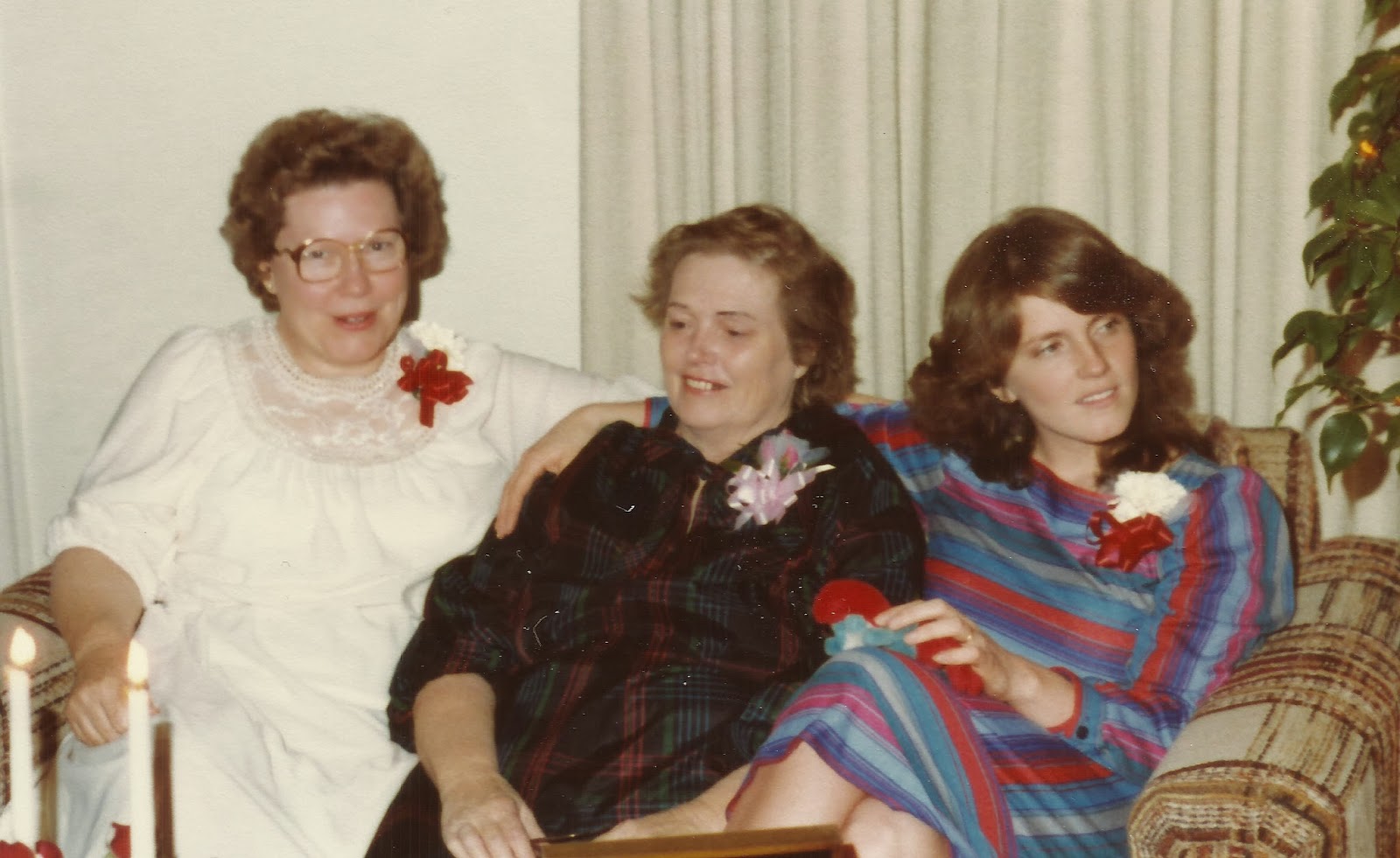
Aunt Jeanne Marie, Mother, and me. December 1982
I’ll never know my mother’s true motives. In many of our conversations in the last years of her life, she wept bitterly over her regrets as a parent. She said she did the best she could. Her heart spoke volumes so I never felt the need to press for an apology.
Ultimately, it’s my choice to apply grace to her actions. And in doing so, I rob the ugly of any potential to grow. I stop the progression of the wounded wounding others. I change the projectory of the wrong.
For after all, God’s grace covers all. And in Him, I see with different eyes. In Him, I see the transfiguration from ugly to beautiful. And it changes me.
34. A loving aunt.
35. The grace to forgive.
36. Untainted memories.

How to get Mojo

I’d seen her do it many times. After getting dressed, she spins around, looks me in the eye, and with a girlish smile asks, “How do I look.” The answer is always the same, “You’re beautiful.” At 85, my Aunt Jeanne Marie is still the most beautiful woman I know.

At a time when the Internet daily shoves images of the ideal beauty at me, none compare to this woman who has so richly impacted my life.

I’m fascinated with a news segment called, “Stars Who Lost their Mojo.” A series of before and after photos of celebrities who’ve had the misfortune of getting older. But I’d like to challenge this standard. I’d like to say, Aunt Jeanne Marie never lost an ounce of her mojo, in fact she gained it as she got older.
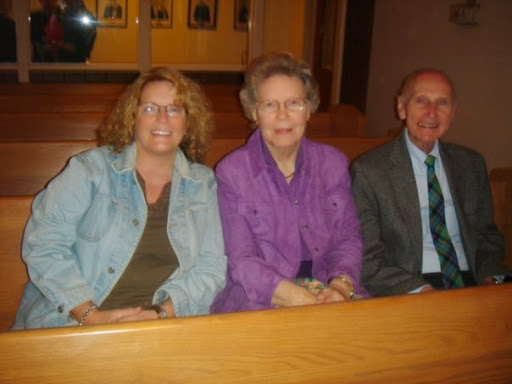
Aunt Jeanne Marie, Nora, Sheila, and me

Once, as a little girl, I sat in the bathroom and watched Aunt Jeanne Marie go through her nightly ritual of washing her face. When I asked her what she was doing, she said, “Honey, whatever you do for your skin it will appreciate.” But today, Aunt Jeanne Marie isn’t beautiful because of the moisturizer she used.  She’s beautiful because of the woman she became.

Her’s was a life like most of ours, filled with grief and sorrow, joy and triumphs. But she chose to focus on the good. Like when she could have no children of her own, so she stepped in and helped my mother raise her six.

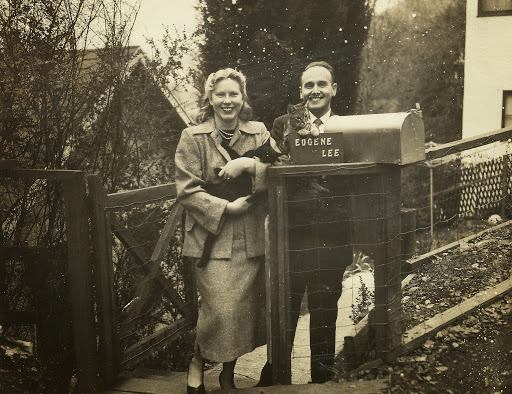
Today, she and my Uncle Eugene live in a little house in San Francisco. They don’t have much because they enjoyed giving most of their possessions away.

Aunt Jeanne Marie, my granddaughter Juliette, Uncle Eugene, my sister Sheila


It’s easy when we’re young to rely on our exterior appearance.  But by the time we’re in our fifties, our face tends to reflect the people we really are. Our wrinkles are the imbedded joys, sorrows, and tensions we’ve chosen to spend our lives focusing on.

I think Mojo should be all the good stuff that comes out when we choose to age well. I’d like to change our culture to value women like my Aunt Jeanne Marie. A woman who chose a life soaked in forgiveness. Whose mojo goes to the very depth of her soul.
I dream of a day, when my grandchildren will see a segment called, “People Who Gained their Mojo.” Picture after picture of sweet gentle old folks with laugh lines embedded in their faces and crows feet reflecting a spark in their eye. Because that’s a beauty fought for. A beauty that doesn’t come natural.

Merlin

Several years ago while visiting a favorite aunt in San Francisco, I noticed a two-inch pewter figurine of Merlin looking out of place among the angels and intricately carved wooden boxes on the shelf in her guest room. Turning it over I wondered how this odd little thing had come into my aunt’s possession.

Merlin’s pointed wizard’s hat came down over his forehead with just enough room to reveal a thick set of bushy white eyebrows. A full mustache covered his lips, and a flowing beard covered his chest all the way to the waist of his royal blue robe. In his left hand he held a crystal ball while the fingers of his right grasped a tall crooked walking stick

While I stared at the intriguing figurine, Aunt Jeanne Marie walked into the room. Smiling she said, “Your mother bought me that. It’s a funny story.” Then she went on to tell me where he came from.

Several years earlier, after a visit with my mother in Virginia, the two of them were rummaging through a gift shop at Dulles Airport while waiting for my aunt’s flight to leave. Unexpectedly, the figurine caught Aunt Jeanne Marie’s eye. For some reason, she said, the little wizard embodied all her strongest childhood fantasies. She thought of purchasing him but the price seemed too high for something so silly.

After she hugged my mother goodbye and boarded her flight, she couldn’t stop thinking about the figurine. Something about it stirred precious memories of their childhood. Since Mother was traveling to San Francisco in a few weeks, Aunt Jeanne Marie called and asked her to pick up the figurine on her way out.

Being absent minded, my mother’s plane was in the air before she realized she had forgotten to buy Merlin. Not wanting to let her sister down, she called the store from California and arranged to have the figurine sent to my aunts house.

Still holding Merlin, a swell of emotions rose as I thought of the relationship between my mother and my aunt. For most of my life I had witnessed this close bond between these very different sisters.

When my father died, leaving Mother alone with six kids, it was my Aunt Jeanne Marie who came. Daily I watched her care for my mother when she fold down bed, polished her shoes, and cook our meals. I heard their soft conversation late into the night. Any time my Mother needed help, Aunt Jeanne Marie came back and did it all over again.

A few of years after my mother died I was back at my aunt’s house in San Francisco sitting with her in the dining room. She told me how she longed to pass her possessions along now so she could, “enjoy watching them go on to their next life.” Then she asked me what things of hers I wanted.

I immediately thought of the figurine, “All I want is Merlin,” I said. She looked a little surprised. “To me, he will always represent the love between you and Mother. Long after you’re gone, he will remind me of how close you two were.”

“He’s yours.”

Today Merlin stands front and center on the shelf of the curio cabinet in my formal living room. He looks just as out of place among my china and crystal as he did on the shelf in my aunt’s guest room. But he is one of my most prized possessions. Often, I walk past him without even noticing him. But then some days he catches my eye and I stop and breathe in all he represents.

His presence causes me to reflect on the unique love between Mother and her sister. He reminds me to take time and remember the positive heritage passed along to me. He represents the value of family and the deep love we find there.

Someday I hope my grandchildren will ask me about the unusual figurine in my curio cabinet. When they do, I’ll tell them my Merlin story. I’ll tell them about my mother and my aunt while adding stories of me and my brothers and sisters. I’ll remind them of the importance of family and friendship. I may embellish a bit, but at a time when how we look is more important than who we are, my grand-kids need these strong role models to help mold the men and women they will one day become.